















Selection and Optimization of Terminating Resistorsn design
In modern industrial automation and communications, signal integrity has become one of the key challenges in system design as data transmission rates continue to increase, and Connoder, as a dedicated connector specialist, understands the importance of termination resistors in high-speed data transmission.
Role of Terminating Resistors
The central role of terminating resistors is to reduce signal reflection by impedance matching, thereby improving signal quality and stability. In high-speed data transmission, signals travel along transmission lines at speeds approaching the speed of light. If the end of the transmission line is not properly terminated, the signal may reflect, resulting in signal distortion or interference. By providing a load that matches the characteristic impedance of the transmission line, the terminating resistor effectively absorbs the reflected wave and ensures that the signal is transmitted to the receiving end accurately and without error.
Terminating resistors also provide the following functions:
Improve interference immunity: allow high-frequency, low-energy signals to quickly go away, avoiding the effects of external noise on the signal.
Ensure that the bus enters a recessive state quickly: allow the energy of parasitic capacitors to be released more quickly, preventing signal delay.
Improve signal quality: placed at both ends of the bus to reduce reflected energy and reduce ringing.
Why choose 120Ω as the standard termination resistance value?
Matches the characteristic impedance of the transmission line
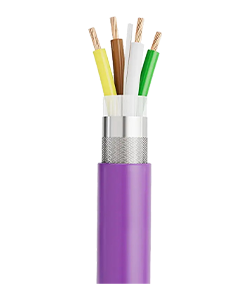
The characteristic impedance of most twisted-pair cables is about 120Ω, so choosing 120Ω as the standard value of termination resistor can achieve the best impedance matching. This matching not only reduces signal reflection, but also improves the system's immunity to interference and ensures rapid signal entry into the hidden state.
Industry standard support
120Ω is widely recommended as the standard value for termination resistors in industry standards such as CAN bus. This standard is supported by relevant specifications such as ISO 11898-2, ensuring interoperability and compatibility between different devices3.
Experimental verification
The characteristic impedance of a cable can be determined by experimental methods. For example, using two typical cables used in automobiles, the characteristic impedance measured after twisting them into twisted pairs is approximately 120 Ω. This indicates that the 120 Ω termination resistance value is a scientific choice based on actual cable characteristics.
Termination Resistor Selection and Optimization Strategies
Precision of Resistance Value
In order to achieve the best impedance matching, the resistance value of the termination resistor should be as close to 120Ω as possible, and the accuracy is usually required to be within ±1%. A high precision termination resistor can significantly reduce signal reflection and improve the overall performance of the system.
Power Capacity
The power capacity of the terminating resistor should be selected according to the actual working conditions. It is generally recommended to use a resistor with a power of 0.25W to ensure that the performance will not be degraded or damaged due to overheating under regular operating conditions. For some special application scenarios, higher power resistors may be required to cope with extreme conditions.
Mounting Location
Terminating resistors should be mounted as close as possible to the end of the transmission line to minimize the effects of signal reflection. For differential signal transmission, terminating resistors should be installed in parallel between the two signal lines. Correct mounting position contributes to signal quality and system reliability.
Environmental Adaptation
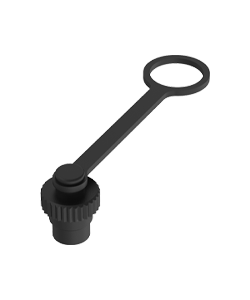
For use in harsh environments, products with good protection ratings (e.g., IP67) should be selected to ensure that the terminating resistors can work properly under conditions such as dust and humidity. High temperature and corrosion resistant materials are also important considerations when selecting terminating resistors.
Temperature Coefficient
Temperature variations may cause changes in the resistance value, which in turn affects the impedance matching. When selecting terminating resistors, products with low temperature coefficients should be prioritized to ensure their stability under different temperature conditions.
Application Scenarios for Terminal Resistors
Industrial Automation Field
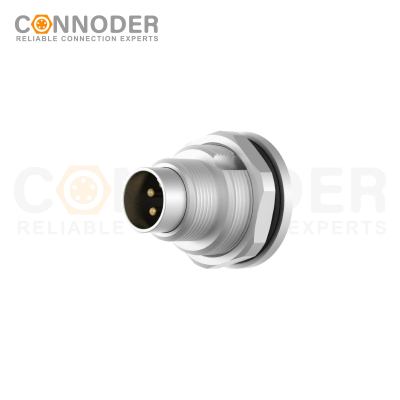
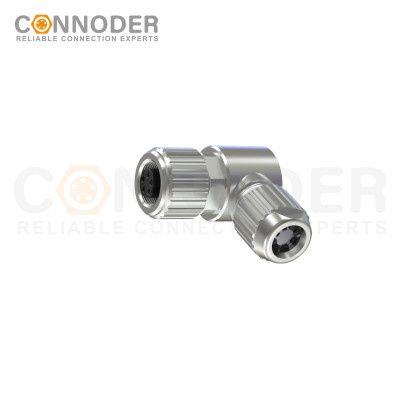
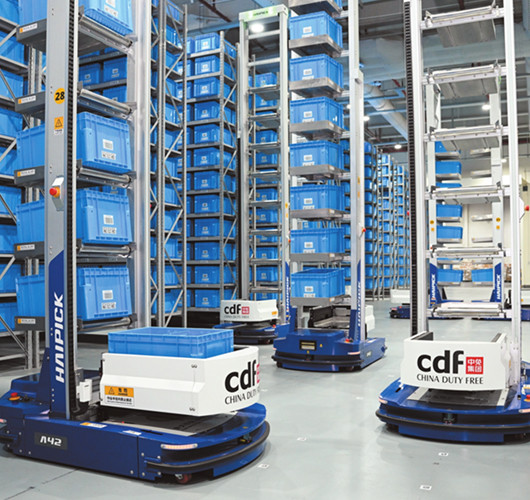
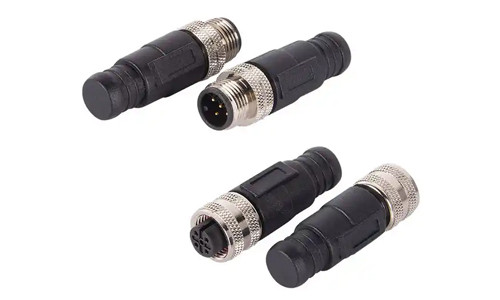
In industrial automation systems, terminating resistors are widely used in various fieldbus networks such as DeviceNet, Profibus DP, CANopen and NMEA 2000. These networks usually use M12 or M8 size connectors with 120Ω terminating resistors to ensure the stability and reliability of data transmission.
Automotive Electronic Systems
In automotive electronic systems, CAN bus and its derivatives (e.g. CAN FD) have become the mainstream data transmission method. Terminating resistors play a vital role in these systems, effectively reducing signal reflection and improving communication quality.
Communication Devices
In communication equipment, terminating resistors are used to match the characteristic impedance of transmission lines to ensure the integrity and accuracy of high-speed data signals. Especially in long-distance transmission or complex topology, reasonable termination resistor configuration is particularly important.
The selection and optimization of terminating resistors is critical to improving the signal integrity of high-speed data transmission. terminating resistor products from Connoder have become the preferred solution for many industrial automation and communication systems due to their precise resistance values, reliable performance, and wide applicability. By selecting and optimizing termination resistors, together we can create more efficient and reliable data transmission systems. We continue to devote ourselves to technological innovation and product quality improvement to provide better solutions for our customers.