















What are the differences between circular and rectangular connectors, and how should you choose?
What are the differences between circular and rectangular connectors, and how should you choose?
Introduction
Choosing between a circular connector and a rectangular connector is not simply a matter of shape. The right choice can affect contact density, environmental protection, vibration resistance, installation space, maintenance efficiency, and long-term system reliability.
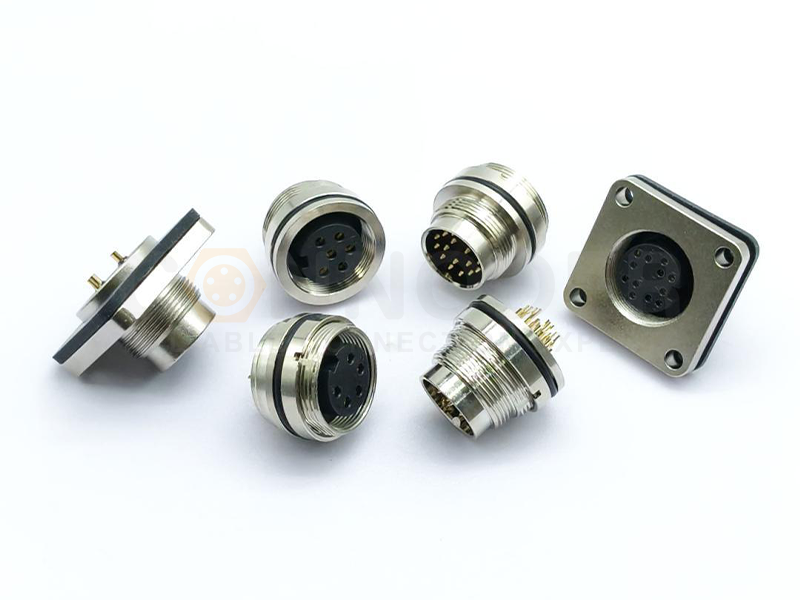
Circular Connectors
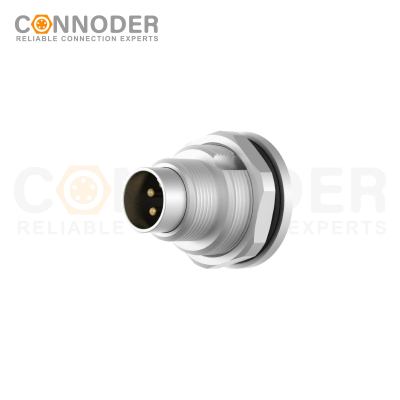
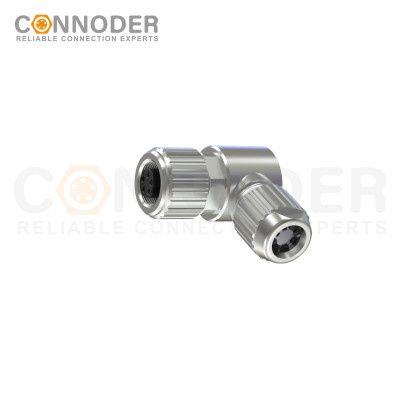
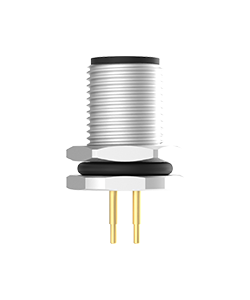
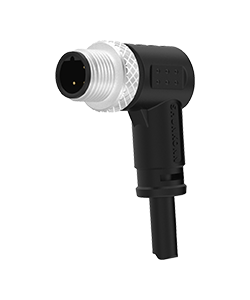
Rugged, compact and versatile — ideal when you need mixed power & signal plus environmental protection.
Quick Answer: Circular Connector vs. Rectangular Connector
Choose a circular connector when your application requires compact machine-level connectivity, environmental protection, reliable locking, vibration resistance, or connections for sensors, actuators, and industrial communication.
Choose a rectangular connector when you need high contact density, modular inserts, multiple circuits in one interface, or efficient integration into control cabinets and large equipment.
What Is a Circular Connector?
A circular connector is an electrical connector with a round or cylindrical mating interface. Its contacts are arranged within a circular insulating insert and may be used to transmit power, control signals, sensor signals, or industrial data.
Common locking methods include threaded coupling, bayonet locking, push-pull locking, and snap-lock structures. Circular connectors are widely used in industrial automation, robotics, sensors, actuators, machine vision, transportation equipment, measurement devices, and outdoor installations.
Typical Advantages of Circular Connectors
Compact and space-efficient interfaces
Reliable mechanical coupling options
Suitable designs for vibration-prone environments
Available environmental sealing for demanding applications
Convenient panel and cable-mounted configurations
Widely used for industrial sensors, actuators, power, and communication
Important: A circular shape alone does not guarantee waterproof performance. Always verify the specific IP rating, sealing structure, assembly requirements, and manufacturer specifications.
What Is a Rectangular Connector?
A rectangular connector uses a square, flat, or box-shaped housing. Its contacts are generally arranged in rows or grid patterns, making this format useful for organizing multiple circuits within a structured interface.
Depending on the product design, rectangular connectors can support signal contacts, power contacts, high-current contacts, data connections, and modular inserts. They are commonly used in control cabinets, large machinery, railway systems, power distribution equipment, telecommunications systems, and high-density wiring applications.
Circular Connector vs. Rectangular Connector: Key Differences
| Selection Factor | Circular Connector | Rectangular Connector |
|---|---|---|
| Shape | Round or cylindrical | Square, flat, or rectangular |
| Contact Layout | Circular or radial arrangement | Rows, grids, or modular inserts |
| Contact Density | Depends on connector family and shell size | Often advantageous for high-density interfaces |
| Environmental Protection | Commonly used for sealed industrial interfaces | Depends on housing and sealing system |
| Vibration | Often supported by threaded or bayonet coupling | Depends on locking and mounting design |
| Installation | Round panel cutouts are common | Rectangular openings or mounting frames |
| Modularity | Multiple standardized configurations | Often supports modular inserts |
| Typical Use | Sensors, automation, robotics, field devices | Control cabinets, machinery, multi-circuit systems |
Shape and Structural Design
The circular connector's symmetrical housing is particularly useful for compact machine interfaces, cable-mounted connections, and round panel installations. Rectangular connectors use a flatter geometry that can organize multiple circuits or modules in a structured arrangement.
Choose Based on the Installation
Circular connectors are often a practical choice for sensors, actuators, field devices, machine frames, and compact equipment. Rectangular connectors may be more efficient when many circuits must be consolidated into one large interface.
Pin Count and Contact Density
Contact count is an important engineering consideration. Circular connectors can support a range of pin configurations, but increasing the number of contacts may require a larger shell size. Rectangular designs can use rows, grids, or modular inserts to accommodate complex multi-circuit interfaces.
Do not choose based on pin count alone. Also evaluate current per contact, voltage, signal type, shielding requirements, thermal performance, and available installation space.
Environmental Protection and Sealing
Environmental requirements are a major reason to consider a circular connector. Properly designed industrial circular connectors can incorporate O-rings, gaskets, cable seals, and other features to support specific protection requirements.
When comparing products, always evaluate the actual rated performance rather than assuming that one connector shape is inherently better. The complete connector system, including housing, seals, cable entry, locking method, and correct installation, determines real-world protection.
Vibration Resistance and Mechanical Reliability
Industrial equipment may experience continuous vibration and mechanical shock. Many circular connector designs use threaded or bayonet coupling mechanisms that provide positive mechanical retention. Rectangular connectors can also provide reliable performance when their housing, latch, mounting, and contact systems are properly matched to the application.
Evaluate the actual connector specifications for coupling mechanism, contact retention, strain relief, vibration conditions, shock requirements, mounting method, and mating-cycle expectations.
Installation and Panel Space
Connector installation should be evaluated together with cable routing and maintenance access. Circular connectors commonly use round panel openings and are convenient for many machine-level interfaces. Rectangular connectors may require dedicated openings or mounting frames but can efficiently consolidate multiple circuits.
A Common Industrial Automation Example
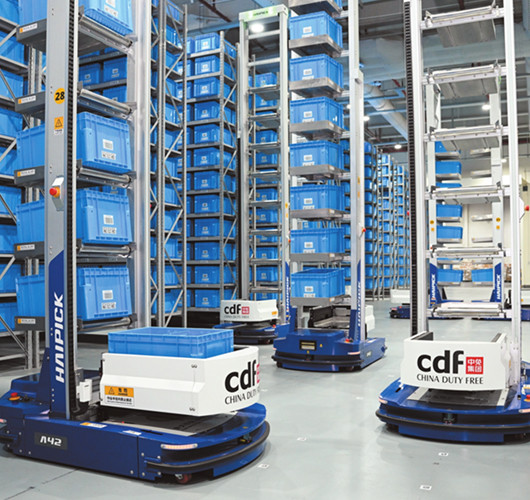
One automated production line may use M8 or M12 circular connectors for sensors, actuators, cameras, and communication devices, while a larger rectangular connector handles a centralized multi-circuit interface at the control cabinet. The two connector types can complement each other within the same system.
Locking Mechanisms and Maintenance
Circular connectors may use threaded, bayonet, push-pull, or snap-lock mechanisms. Rectangular connectors may use levers, latches, screws, or clips. The correct choice depends on vibration, mating frequency, installation speed, maintenance access, and required connection security.
For applications with frequent servicing, also consider coding and keying to help reduce the risk of incorrect mating.
Conclusion
For applications where a circular connector is the right solution, CONNODER focuses on industrial circular connectivity and related cable solutions. Its product range includes connector families such as M5, M8, M9, M12, M16, and 7/8-inch circular connectors.
These product families can support a wide range of industrial connectivity requirements involving sensors, actuators, automation equipment, control systems, communication devices, and other machine-level applications.
What is the main difference between circular and rectangular connectors?
The main difference is their shape and contact arrangement. Circular connectors use a round housing and are commonly used for compact, sealed, and vibration-resistant industrial connections, while rectangular connectors are often used for high-density and multi-circuit applications.
When should I choose a circular connector?
You should choose a circular connector when your application requires compact installation, reliable locking, environmental protection, vibration resistance, or connectivity for sensors, actuators, robotics, and industrial automation equipment.
Are circular connectors better than rectangular connectors?
Neither connector type is universally better. Circular connectors are often preferred for machine-level and harsh-environment applications, while rectangular connectors can be more suitable for high contact density, modular configurations, and control cabinet connections.
Can circular and rectangular connectors be used in the same industrial system?
Yes. Many industrial systems use circular connectors for field devices such as sensors and actuators, while rectangular connectors are used for centralized control cabinets or high-density equipment interfaces.
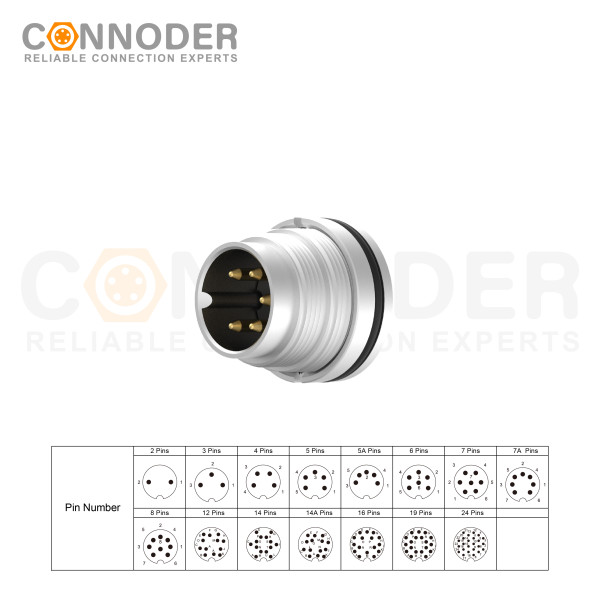
M16 6 Pin Circular Connector A-Code Interface, Waterproof Connector Receptacle Cable, Straight, Front-Locking, Unshielded
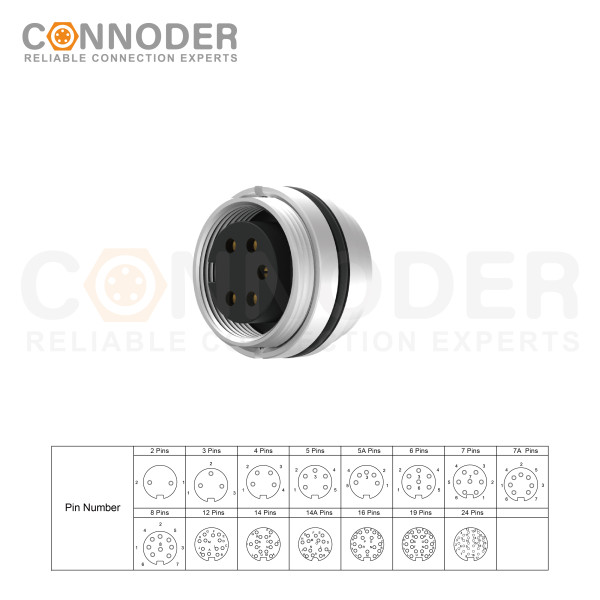
M16 6 Pin Circular Connector assemblies are ideal for demanding industrial applications such as industrial automation and aerospace, marine, and telecom systems.
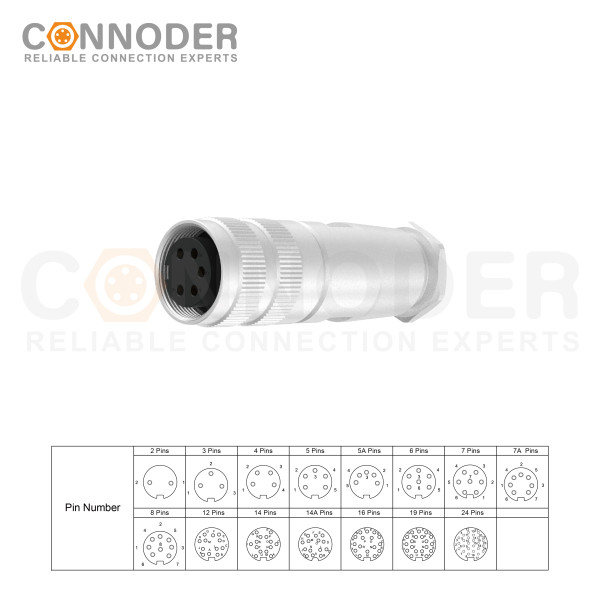
M16 6 Pin Circular Connector are ideal for demanding industrial applications such as industrial automation and aerospace, marine, and telecom systems. M16 Circular Connector are available in quick-lock wiring assembly types with IP67 protection and a vibration-resistant screw design.
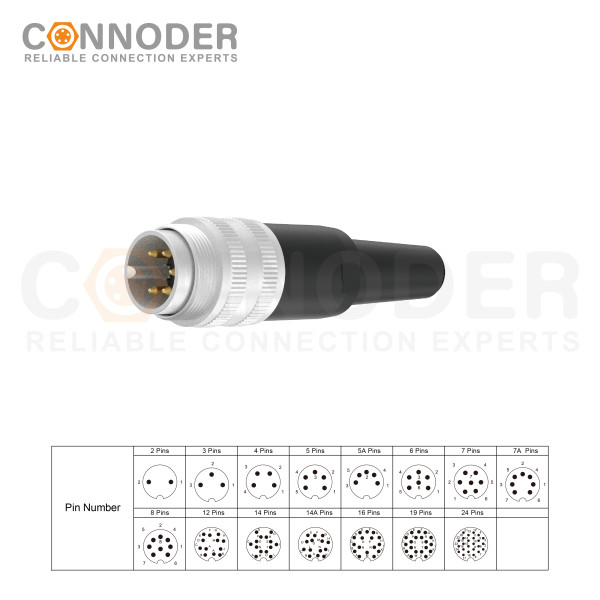
M16 6 Pin Circular Connector are ideal for demanding industrial applications such as industrial automation and aerospace, marine, and telecom systems. M16 Sensor connector are available in quick-lock wiring assembly types with IP67 protection and a vibration-resistant screw design.